So, AIBN isn’t actually a polymer on its own. Instead, it acts as a thermal free-radical initiator—that’s the chemical that kickstarts the formation of polymer chains. This might sound a bit technical, but it really matters when we're talking about things like Aibn Polymer. The thing is, that same initiator can support different kinds of polymers, depending on factors like the monomer you use, the solvent, the temperature, and how you set up your reaction.
You’ll often hear about polymers like polymethyl methacrylate (that’s PMMA), polystyrene, various polyacrylates, or methacrylate copolymers. AIBN can also be used to start some acrylonitrile-based systems or special resin formulas. Each type behaves differently—PMMA, for example, might give you excellent optical clarity and surface hardness, while polystyrene is known for being stiff and easy to process. Acrylates tend to be more flexible and are great for things like adhesion or weather resistance. But, of course, the final outcome depends on more than just the initiator.
As George Odian, a pretty well-known figure in polymer chemistry, once put it: “The initiator supplies the radicals that start chain growth.” It’s a simple way to explain it, although in real-life production, things are a bit more complicated. AIBN breaks down at higher temperatures, releasing nitrogen gas in the process. So, manufacturers have to carefully control various factors like heat, concentration, oxygen exposure, and the scale of the reaction. Companies like Mitsubishi Chemical Group, Arkema, and BASF take all these factors into account—they rely on technical data, trial runs, and safety info to get it right.
Now, trying to categorize AIBN-based polymers straightforwardly can sometimes be a bit misleading. That’s why, in this guide, I’ve compared the main types of AIBN-based polymers based on their chemical structure, how they perform, what processing is needed, and their typical uses. I also looked at things like how molecular weight is controlled, residual initiator levels, and batch-to-batch consistency. Just a heads-up—some of these conclusions are conditional, since lab results don’t always perfectly predict what happens at an industrial level. That’s an important detail, not something to overlook.
AIBN and Its Role in Polymer Synthesis
What Are the Top AIBN Polymer Types?
AIBN and Its Role in Polymer Synthesis
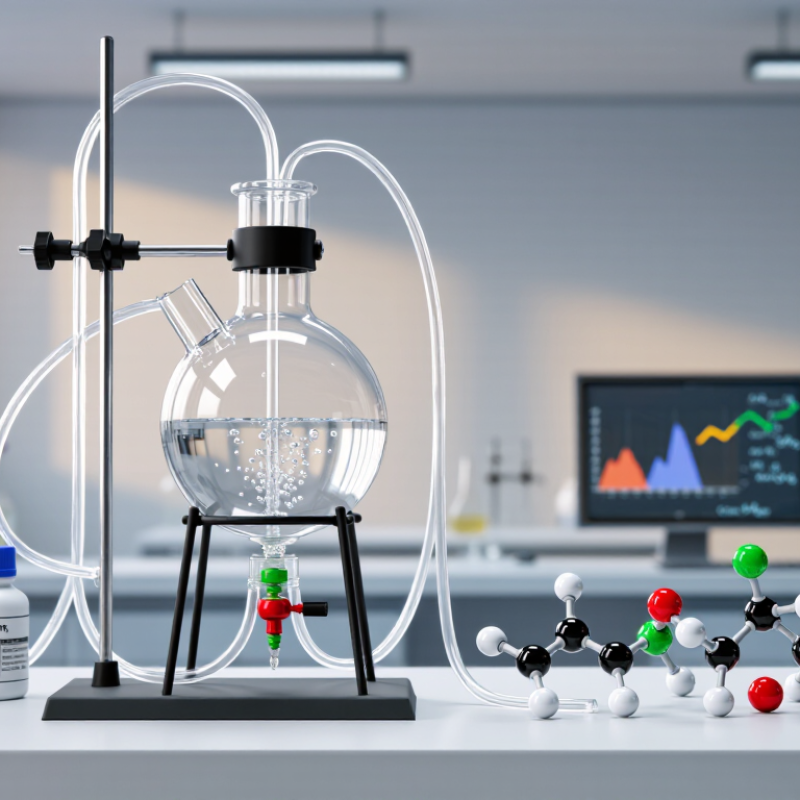
AIBN, or azobisisobutyronitrile, is a thermal radical initiator used in many vinyl polymerizations. When heated, it decomposes and releases nitrogen gas. The remaining radicals attack carbon-carbon double bonds in monomers. This starts chain growth under controlled conditions.
AIBN commonly supports polystyrene, polymethyl methacrylate, and various polyacrylate systems. It also helps produce methacrylate copolymers with adjustable hardness, clarity, and flexibility. In an Initiator Polymer process, solvent choice affects radical activity and heat transfer. AIBN works well in many organic solvents, but it has limited water compatibility. Temperature matters. Its decomposition rate changes with concentration, solvent, and reactor design.
In practical laboratory work, chemists often select AIBN for moderate-temperature polymerization. A typical reaction may begin near 60–70°C, though the exact range requires measured kinetic data. Too much initiator can create shorter polymer chains. Too little may leave unreacted monomer. That balance is easy to underestimate. Careful temperature control, oxygen reduction, and suitable ventilation improve repeatability. Handling also requires current safety documentation and controlled storage because AIBN can decompose when exposed to heat. Results can still vary between batches. Impurities, mixing differences, or an inaccurate temperature probe may change molecular weight. Recognizing these imperfections is part of responsible polymer development.
Key Factors for Classifying AIBN-Initiated Polymers
What Are the Top AIBN Polymer Types?
AIBN-initiated polymers are best classified by their monomer families, not by the initiator alone. AIBN generates free radicals during controlled heating, often near 60–70°C. These radicals can polymerize styrenes, acrylates, methacrylates, vinyl esters, and related monomers. The resulting materials may include polystyrene-like plastics, flexible acrylate polymers, rigid methacrylate materials, and vinyl ester resins.
The backbone structure matters greatly. Carbon-chain polymers usually come from vinyl monomers and show different strength, flexibility, and solvent resistance.
Classification also depends on architecture. Linear chains, crosslinked networks, block copolymers, and random copolymers can use similar initiation chemistry. They are not equivalent materials.
A small change in comonomer ratio may alter glass transition temperature, transparency, or elasticity. Real samples often contain broad molecular-weight distributions.
Processing conditions provide another reliable classification factor. Temperature, solvent polarity, oxygen exposure, monomer concentration, and AIBN loading influence conversion and chain length. In practical laboratory work, oxygen inhibition can leave a sticky surface or incomplete outer layer. Residual initiator may also complicate analysis.
I would avoid calling every AIBN-made material a simple “Aibn Polymer.” That label is convenient, but incomplete. A better description names the monomer, copolymer structure, molecular-weight range, and curing conditions. The boundary between polymer types is sometimes less neat than a chart suggests.
AIBN-Initiated Acrylic and Methacrylic Polymers
AIBN-initiated acrylic and methacrylic polymers are valued for predictable free-radical polymerization. AIBN decomposes with heat and releases nitrogen gas. The resulting radicals attack vinyl groups in monomers such as methyl methacrylate, butyl acrylate, and acrylic acid. This process can produce clear resins, flexible coatings, pressure-sensitive adhesives, and laboratory-scale films.
Temperature control matters. A reaction vessel may appear calm at 60°C, then warm quickly as polymerization accelerates. Monomer purity, solvent choice, oxygen exposure, and AIBN concentration can change molecular weight and conversion. In practical work, I would monitor viscosity and temperature rather than trust a fixed recipe. Small oxygen leaks can leave a tacky surface. That detail is easy to overlook.
Methacrylic polymers often provide stronger rigidity than many acrylic systems, while acrylic segments can improve flexibility and impact resistance. The final balance depends on comonomer selection and feed rate. Compared with a Bpo Polymer process, AIBN systems may offer cleaner decomposition byproducts, but they are still sensitive to storage temperature and dosage. Less initiator is not always better. Too little can leave residual monomer, while too much may shorten polymer chains and reduce performance. Repeat trials are necessary, because real reactors rarely behave like ideal calculations.
AIBN-Initiated Styrene-Based Polymers
AIBN-initiated styrene-based polymers are widely used when controlled radical polymerization is required. An Aibn Initiator decomposes under moderate heat and releases nitrogen gas, creating radicals that attack styrene molecules. This process can produce polystyrene, styrene-acrylonitrile, and selected styrene copolymers. The final structure depends on temperature, solvent, monomer ratio, and reaction time.
Control matters greatly. Too much initiator may lower molecular weight and leave unwanted residues. Too little can slow conversion and create uneven batches. In practical work, technicians monitor viscosity, temperature, and oxygen exposure inside the reactor. Small bubbles may appear as AIBN decomposes. They are easy to overlook. PlasticsEurope’s Plastics— the Fast Facts 2023 reported global plastics production of 400.3 million tonnes in 2022, showing the scale of polymer manufacturing that supports demand for reliable initiation systems. Yet this figure covers all plastics, not styrenics alone. That distinction deserves attention. Industry evaluations commonly compare conversion, molecular-weight distribution, residual initiator, and energy use before selecting AIBN for styrene-based production. Temperature control remains a weak point in some small-scale trials. A few degrees can change the reaction profile./
AIBN-Initiated Vinyl and Copolymer Systems
What Are the Top AIBN Polymer Types?
AIBN is a thermal radical source used to build many vinyl-based polymers. Its main value is predictable decomposition under controlled heating. When heated, it releases nitrogen and carbon-centered radicals. These radicals attack carbon-carbon double bonds and start chain growth. The details matter.
In styrene systems, AIBN can initiate polystyrene formation with steady conversion and manageable molecular-weight control. Acrylate and methacrylate systems are also common. They can produce flexible coatings, rigid plastics, or pressure-sensitive materials, depending on monomer structure and formulation. Vinyl acetate behaves differently and may require closer temperature control. Copolymer systems combine two or more monomers, such as styrene with an acrylate, to balance strength and flexibility.
An Aibn Radical Initiator is often chosen when moderate-temperature polymerization is practical. Solvent choice, initiator concentration, oxygen exposure, and heat removal all affect the final polymer. Too much initiator may shorten chains and broaden the product’s properties. Too little may leave unreacted monomer. That trade-off is easy to underestimate.
In laboratory practice, temperature ramps should be recorded, not guessed. A small heating variation can change conversion and viscosity. This is where experience becomes useful, although experience alone is not enough. Kinetic data, thermal analysis, and small-scale trials should guide process decisions. Some formulations still behave unexpectedly, especially when monomer ratios or mixing conditions change.
Selecting the Right Polymer Type for AIBN Polymerization
Selecting the right polymer type matters more than simply adding AIBN. AIBN works well with vinyl monomers, including styrene, methyl methacrylate, and many acrylates. The monomer’s polarity, viscosity, and heat release shape the final result. Polystyrene suits rigid test pieces, while poly(methyl methacrylate) offers clearer, harder surfaces. Flexible acrylate polymers need closer control of crosslinking and conversion.
Temperature changes the reaction sharply. AIBN commonly shows a half-life near ten hours at 65°C, according to published initiator kinetics data. Its half-life drops to about one hour near 82°C. That difference can alter molecular weight and batch consistency. Start with the target polymer, then match the solvent and reaction temperature. Not the other way around. Solution polymerization helps remove heat, while suspension methods can improve particle control.
Industry scale also affects this decision. PlasticsEurope’s Plastics—The Fast Facts 2024 reports about 400 million tonnes of global plastics production in 2022. Yet large-volume production does not guarantee the best laboratory choice. A 2024 polymer market analysis from Grand View Research identifies packaging and construction as major demand areas, but these sectors often require different polymer structures. In practice, I would run a small conversion study first. A neat prediction is not always right. Viscosity may rise faster than expected, and residual monomer can remain higher than the calculated value. Temperature logs, gel fraction, and molecular-weight testing should guide the final selection.
What Are the Top AIBN Polymer Types?
Selecting the Right Polymer Type for AIBN Polymerization
AIBN is a thermal free-radical initiator commonly used for vinyl polymerization, typically near 60–80°C. The chart compares representative glass-transition temperatures (Tg) for polymer types that can be prepared using AIBN. Lower-Tg polymers such as poly(n-butyl acrylate) remain flexible, while higher-Tg materials such as polyacrylamide and PMMA provide greater rigidity. Actual values vary with molecular weight, tacticity, copolymer composition, moisture, and measurement conditions.
Representative dry-polymer Tg values in °C; literature ranges commonly reported for these polymer families.
Tert-Amylperoxy 2-Ethylhexyl Carbonate 98%: China Supply Insights from ICIS and Grand View Research Reports
Tert-Amylperoxy 2-Ethylhexyl Carbonate, commonly supplied at 98% purity, is an important organic peroxide initiator for polymerization and cross-linking. It supports the manufacture of thermoset resins, adhesives, coatings, and engineered plastics by generating reactive radicals under controlled conditions. Market analysis from Grand View Research has identified sustained growth in the global polymer sector, with demand expanding at a mid-single-digit compound annual growth rate through the decade. This trend supports continued interest in reliable initiator supplies for construction materials, automotive components, and aerospace applications.
China has become an important sourcing base because of its integrated chemical manufacturing network, export infrastructure, and expanding domestic demand. ICIS market coverage emphasizes that purchasing decisions for organic peroxides are influenced by purity, production consistency, packaging, lead time, and compliance documentation rather than price alone. Suppliers of 98% Tert-Amylperoxy 2-ethylhexyl carbonate typically provide technical specifications covering active oxygen content, stability, and recommended storage conditions. Its relatively low volatility can support safer industrial handling, but the material remains reactive and temperature-sensitive. Controlled storage, compatible packaging, trained personnel, and documented transport procedures are essential throughout the supply chain.
Conclusion
Aibn Polymer systems are formed when AIBN acts as a heat-activated radical initiator, generating reactive species that start chain-growth polymerization. The resulting polymer type depends on the monomer structure, reaction conditions, solvent, temperature, and desired molecular weight. Acrylic and methacrylic polymers are widely valued for their clarity, adhesion, weather resistance, and adjustable flexibility, while styrene-based polymers can provide rigidity, dimensional stability, and useful surface properties.
AIBN can also initiate vinyl polymers and mixed copolymer systems, allowing manufacturers to combine characteristics such as toughness, transparency, chemical resistance, and processability. Selecting the right polymer type requires considering the target application, monomer reactivity, heat sensitivity, conversion rate, and control over molecular architecture. By balancing these factors, AIBN-initiated polymerization can be tailored to produce materials with predictable performance and practical manufacturing characteristics.