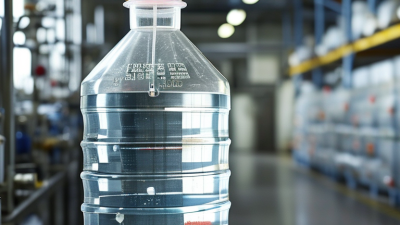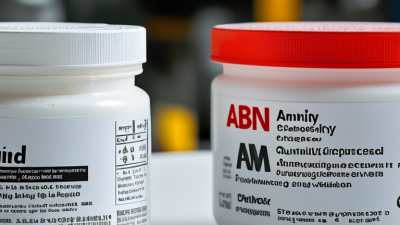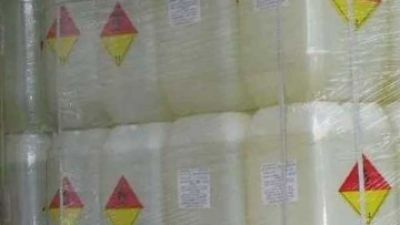
Picking a reliable supplier for Tert-Butyl Peroxyneodecanoate 75% isn’t just a matter of comparing prices or looking at product photos. This stuff is pretty specialized, so you really need to consider more than just the sticker price. You’ll want suppliers who can provide solid documentation, keep their packaging consistent, and handle distribution responsibly. In this guide, I’ve looked at suppliers based on real-world factors like product consistency, technical support, quality management, and how transparent they are about compliance.
A trustworthy supplier should give you a current Safety Data Sheet, a Certificate of Analysis, clear specifications, and straightforward storage instructions. Beyond that, it's smart to check how much experience they have in production, whether they can trace batches easily, if they’re capable of exporting, and how well they communicate. Sometimes, the little stuff makes a big difference — like a readable label that prevents mix-ups during receiving, or clear transport docs that help avoid delays and mishaps.
Keep in mind, this list is meant to get your research started, not to crown a single perfect champion. Public info can be incomplete, outdated, or just hard to compare fairly. That’s something to watch out for. Also, the performance of suppliers can vary depending on your location, how much you order, and what you need it for. So, always double-check current certifications, regulations, packaging standards, and delivery options before making any commitment. Only consider suppliers who operate legally and through approved channels.
The Top 10 Tert Butyl Peroxyneodecanoate 75% suppliers included here are chosen mainly for their reliability, technical know-how, and responsible business practices. Think of these profiles as tools to ask better questions — not just accepting marketing hype at face value. Building a good supplier relationship really comes down to evidence, quick responses, and consistent quality. And hey, mistakes do happen, so doing your homework and verification is still a must.
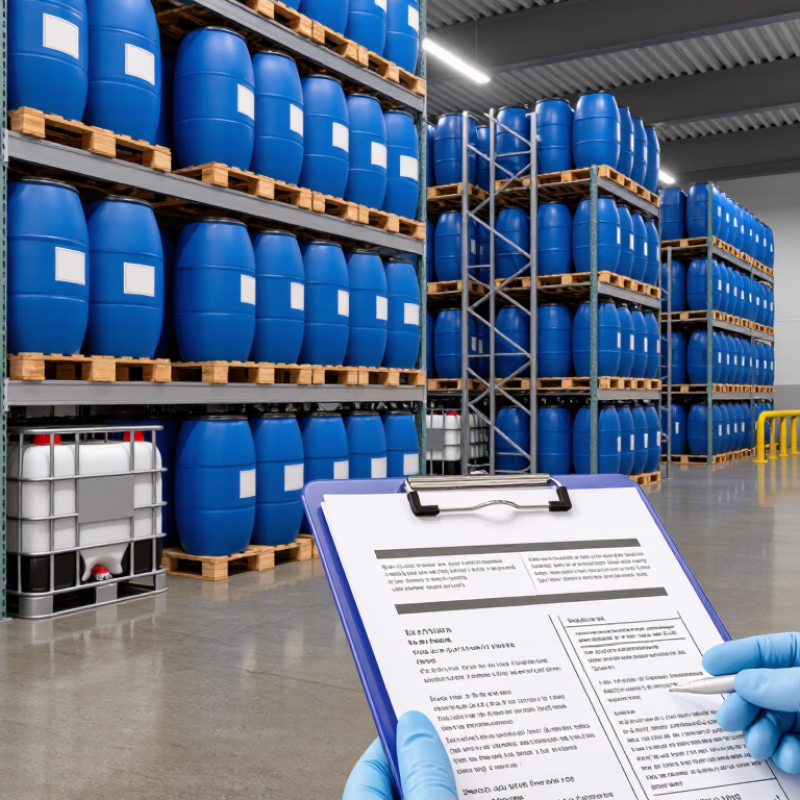
Tert-Butyl Peroxyneodecanoate 75% is an organic peroxide used mainly as a radical initiator. It supports the polymerization of selected vinyl monomers, especially when lower processing temperatures are useful. The “75%” indicates the nominal active peroxide content. The remaining portion is a stabilizing diluent or carrier, depending on the product specification.
This material decomposes and releases reactive radicals under controlled conditions. Its performance depends on temperature, concentration, monomer type, and residence time. A supplier should provide current technical data, safety documentation, assay information, and storage guidance. Reliable documentation matters more than a low quoted price.
The compound is sensitive to heat and contamination. It should remain in its original approved packaging and within the stated temperature range. Never assume that similar peroxide grades behave identically. Small changes in formulation can affect decomposition speed and polymer quality. That point is easy to underestimate.
In practical purchasing, I would check the active-content tolerance, delivery temperature controls, batch traceability, and transport classification. I would also confirm compatibility with the intended process before ordering large quantities. Laboratory screening is valuable, but it does not replace a formal process-safety review. Some supplier descriptions appear simple. The handling reality is not.
Tert-butyl peroxyneodecanoate 75% is a low-temperature organic peroxide initiator. Its 75% concentration is usually stabilized in a compatible diluent. Technical dossiers reported through the European Chemicals Agency describe it as thermally sensitive and reactive. Commercial data commonly place its ten-hour half-life near 43°C, although formulation and testing conditions can change this value. That difference matters during production.
The material supports polymerization in PVC, acrylic, styrene, and selected copolymer systems. It can help control reaction start-up at lower temperatures, improving throughput and reducing excessive thermal exposure. Industry guidance from the OECD eChemPortal and ECHA registration dossiers stresses strict temperature control, approved packaging, and validated dosing equipment. Market reports from Grand View Research estimate that global polymer demand will continue growing through the decade, supporting demand for efficient initiators. Still, growth figures do not guarantee uniform regional consumption. Plant design remains decisive.
Tips: Compare active peroxide content, half-life data, storage temperature, and impurity limits before selecting among the top ten suppliers. Ask for recent certificates of analysis and thermal stability records. Keep containers cool, shaded, and physically separated from incompatible materials. Never rely only on a catalog value. Field performance can differ.
Tert Butyl Peroxyneodecanoate 75% requires disciplined control from receipt to final use. It is an organic peroxide formulation, so heat, contamination, and confinement can increase risk. Before accepting a shipment, trained staff should inspect the container, label, seal, and temperature record. Any swelling, leakage, damaged packaging, or unusual odor requires isolation and immediate review of the current safety data sheet.
Storage conditions must follow the supplier’s specific technical documentation. Refrigerated storage is commonly required, but the permitted range can vary by formulation. Keep containers in a dedicated, clean, well-ventilated area away from direct sunlight, sparks, flames, reducing agents, acids, and incompatible chemicals. Do not store it beside general solvents without checking compatibility. Use secondary containment, secure shelves, and clear stock rotation records. Small details matter.
Handling should use suitable gloves, protective eyewear, protective clothing, and local ventilation. Avoid dropping, dragging, grinding, or opening containers near ignition sources. Never return unused material to its original container after contamination is possible. Keep quantities at the workstation as low as practical. Emergency procedures should cover spills, fire, exposure, and temperature excursions. A thermometer and inspection log can reveal problems early. Still, paperwork alone is not safety; workers need site-specific training and practice. I would also review storage habits regularly, because “routine” can hide preventable mistakes.
When comparing suppliers of T Butyl Peroxyneodecanoate 75%, the product name alone proves little. A qualified supplier should provide a current COA for every batch, not a generic template. Check assay, active oxygen, peroxide content, appearance, water, and decomposition data against your specification. Ask for an SDS, technical data, and documented change-control procedures. Review lot numbers, manufacturing dates, retest periods, and storage conditions. Small gaps here can become larger quality problems.
Compliance requires more than a polished website. Verify the legal entity, site address, manufacturing authorization, quality certifications, and applicable chemical registration records. Request evidence of dangerous-goods classification, approved packaging, accurate labels, and shipment controls. A serious supplier can explain temperature monitoring from warehouse to delivery. Ask how complaints, deviations, recalls, and customer audits are recorded. Records should be clear. Vague answers deserve scrutiny.
Before ranking suppliers, test a representative sample through your own incoming-inspection procedure. Compare the COA with independent laboratory results when the material is critical. Examine container seals, pallet condition, and temperature indicators on arrival. Speak with technical staff, not only sales contacts. Their answers reveal practical experience. A common mistake is overvaluing price while overlooking inconsistent documentation. That weakness is worth admitting. Also examine supply continuity, emergency contacts, insurance, and written responsibilities for nonconforming material. One successful audit does not remove the need for ongoing monitoring.
A practical, brand-neutral evaluation framework for comparing suppliers of tert-butyl peroxyneodecanoate 75% (TBPND 75%), an organic peroxide initiator used in polymer production.
| No. | Evaluation Dimension | Recommended Supplier Evidence | Technical or Compliance Benchmark | Why It Matters | Priority | Review Result |
|---|---|---|---|---|---|---|
| 1 | Product Identity | Current SDS, product specification, CAS reference, chemical name, formulation description, and country of manufacture. | Documentation should consistently identify tert-butyl peroxyneodecanoate and the nominal 75% formulation without conflicting names or concentrations. | Confirms that the quoted material is the intended organic peroxide and not a chemically different initiator. | Mandatory | Verify |
| 2 | Assay and Concentration Control | Representative certificate of analysis, batch test method, specification limits, and historical batch data with sensitive commercial details removed. | Nominal active peroxide concentration should be approximately 75%, with clearly defined lower and upper specification limits. | Concentration affects polymerization kinetics, dosing accuracy, process consistency, and safety calculations. | Mandatory | Verify |
| 3 | Active Oxygen and Purity | Test method, batch results, impurity profile, and a statement describing how decomposition products are controlled. | Results should be reported against a defined internal specification and supported by a validated analytical method appropriate for organic peroxides. | Active oxygen and purity influence initiation performance and the formation of unwanted residues in polymer systems. | Mandatory | Verify |
| 4 | Thermal Stability and SADT | SADT value, control-temperature guidance, emergency-temperature guidance, decomposition information, and thermal hazard assessment. | The supplier should provide a product-specific safety profile and explain storage limits based on the self-accelerating decomposition temperature. | Organic peroxides can decompose exothermically; thermal data are essential for storage, handling, and emergency planning. | Mandatory | Verify |
| 5 | Storage and Shelf-Life Management | Written storage instructions, recommended temperature range, shelf-life statement, stock rotation procedure, and temperature-monitoring expectations. | Storage conditions should be product-specific, temperature controlled, protected from contamination, and supported by a defined expiry or retest policy. | Improper storage may reduce performance, increase decomposition risk, or invalidate the product before use. | Mandatory | Verify |
| 6 | Dangerous-Goods Classification | Transport classification, UN number, proper shipping name, packing instruction, tunnel or transport restrictions, and emergency contact details. | Shipping documents should match the current formulation and applicable dangerous-goods rules, including ADR, IMDG, and IATA where relevant. | Incorrect classification can cause shipment rejection, regulatory penalties, delays, or unsafe transport conditions. | Mandatory | Verify |
| 7 | SDS and Label Compliance | Version-controlled Safety Data Sheet, container label sample, hazard statements, precautionary statements, and local-language documentation. | SDS and labels should align with the applicable GHS implementation and accurately reflect organic peroxide hazards and handling controls. | Clear hazard communication protects workers and supports legally compliant receiving, storage, and use. | Mandatory | Verify |
| 8 | Quality Management System | Quality certification, manufacturing-site scope, change-control procedure, deviation process, complaint records, and recall procedure. | A documented quality system should control raw materials, batch release, analytical testing, nonconformities, and changes affecting product quality. | Systematic controls reduce batch variation and improve traceability when a quality issue occurs. | High | Verify |
| 9 | Batch Traceability and Packaging | Batch-number format, packaging specification, tamper-evidence approach, pallet configuration, container compatibility statement, and retention-sample policy. | Each shipment should be traceable to a production batch, test record, packaging date, and applicable expiry or retest date. | Traceability supports recalls, investigations, inventory control, and safe segregation of incompatible materials. | High | Verify |
| 10 | Technical Support and Supply Continuity | Lead time, minimum order quantity, production capacity, dual-site or contingency plan, technical response time, and procedure for urgent quality incidents. | Supplier should provide realistic delivery commitments, documented business-continuity controls, and qualified technical contacts. | Reliable support reduces production interruptions and enables prompt action when process or safety questions arise. | High | Verify |
Note: Supplier approval should be based on current, product-specific documentation and an independent review of applicable chemical, occupational-safety, and dangerous-goods regulations. The benchmarks above are evaluation criteria rather than claims about any particular supplier.
Top 10 Tert-Butyl Peroxyneodecanoate 75% Suppliers should be assessed through technical evidence, not search visibility. This initiator supports controlled polymerization in selected manufacturing processes. A reliable supplier should provide batch-specific assay data, active oxygen results, impurity limits, and transport documentation. Safety data must match the 75% formulation.
Market scale explains the continuing demand. Plastics Europe reported global plastics production of about 413.8 million tonnes in 2023. That volume supports ongoing demand for polymerization initiators, although it does not prove any supplier’s quality. The OECD and European regulatory guidance also emphasize temperature control, decomposition behavior, and documented hazard management for organic peroxides. Cold-chain records matter. So does packaging integrity.
Purchasers should compare lead times, minimum order quantities, technical support, and regional compliance. Ask for recent certificates of analysis, not generic templates. Confirm storage temperature, shelf-life, and emergency response instructions before ordering. Screen the product identity carefully, because Tert-Butyl Peroxy-3,5,5-Trimethylhexanoate is a different peroxide and should not replace Tert-Butyl Peroxyneodecanoate 75%. Some rankings still blur these names. That is a real weakness. A practical shortlist can score ten suppliers across consistency, documentation, delivery reliability, and safe handling support. Pricing deserves attention, but the cheapest drum may create costly production interruptions.
When comparing the Top 10 Tert Butyl Peroxyneodecanoate 75% suppliers, product specifications should lead the review. Check active content, carrier composition, appearance, viscosity, and decomposition temperature. A clear specification sheet should match the certificate of analysis for each batch. Packaging matters too. Ask whether containers protect the material from heat, sunlight, and contamination. Do not confuse this product with Di-Tert-Butyl Peroxide, which has different handling and performance characteristics.
Service quality often appears in small details. Reliable suppliers provide current SDS documents, technical guidance, sample support, and responsive answers about storage conditions. Confirm whether specialists can explain assay variation and recommended transport temperatures. Delivery terms deserve equal attention. Compare production lead time, minimum order quantity, shipping method, insurance, and temperature-control measures. Written Incoterms should remove confusion about responsibility and customs clearance. Some quotations look cheaper, but refrigerated handling may change the final cost.
Tips: Request a recent batch certificate before placing a large order. Check the stated shelf life and re-test policy. Confirm emergency contact procedures. Keep records of delivery temperature and container condition. A practical trial order can reveal weaknesses in labeling or response time. Supplier rankings can help, but they are not proof of consistent quality. My own review process would also question unusually short lead times, because speed may reflect stock age rather than efficiency.
The chart compares anonymized supplier profiles using a 100-point weighted benchmark covering 75% active content, refrigerated handling, packaging documentation, technical support, regulatory documents, lead-time transparency, and delivery flexibility. All supplier identities and brand references are intentionally omitted.
China’s manufacturers of 1,1-Di(Tert-Butylperoxy) Cyclohexane, CAS 3006-86-8, provide polymerization initiators for modern acrylic production. Commonly supplied under the CH80 designation, this high-efficiency initiator is designed for the co-polymerization and polymerization of acrylates and methacrylates. Its controlled decomposition characteristics can support stable reaction rates, consistent conversion, and reliable product quality in applications such as coatings, adhesives, resins, and specialty polymers.
When selecting a factory supplier in China, buyers should evaluate production capability, batch consistency, technical documentation, packaging standards, and quality-control procedures. A professional manufacturer should be able to provide product specifications, assay and active-oxygen data, recommended storage conditions, and guidance on temperature control and dosage selection. Because organic peroxide initiators are sensitive materials, they should be stored and transported according to applicable safety requirements, away from heat, contamination, and incompatible substances. With dependable manufacturing support and careful process management, CH80 can help polymer producers improve efficiency while maintaining stable performance across different formulations.
It is an organic peroxide used as a radical initiator. It supports polymerization at relatively low temperatures. The material is thermally sensitive.
The figure usually represents nominal active peroxide content. The remaining portion is a stabilizing carrier or diluent. Check the exact formulation before use.
It can support PVC, acrylic, styrene, and selected copolymer systems. Performance depends on monomer type, temperature, concentration, and residence time. Results may vary.
Lower temperatures may reduce excessive thermal exposure during polymerization. They can also support controlled reaction start-up. However, plant design still matters greatly.
Compare active content, carrier composition, half-life data, and impurity limits. Also review appearance, viscosity, decomposition temperature, and shelf life. A catalog value is not enough.
Keep it in approved original packaging. Maintain the stated temperature range. Use a cool, shaded, clean storage area. Keep it away from incompatible materials.
Request current safety documents, technical data, and batch certificates. Check assay information, thermal stability records, and traceability. Confirm transport guidance and emergency contacts.
Yes, a practical trial order can reveal delivery and labeling problems. Laboratory screening helps assess process compatibility. It cannot replace a formal safety review. I might still underestimate small formulation differences.
Tert-Butyl Peroxyneodecanoate 75% is an organic peroxide formulation commonly used as a polymerization initiator in selected industrial manufacturing processes. This overview explains its essential characteristics, including decomposition behavior, concentration, performance considerations, and suitability for applications such as controlled polymer production. It also highlights the importance of temperature control, compatible packaging, accurate labeling, and appropriate storage conditions to help maintain product stability and reduce operational risks.
The guide presents practical criteria for evaluating the top 10 Tert-Butyl Peroxyneodecanoate 75% suppliers without promoting any specific brand. It focuses on product consistency, technical documentation, quality-management systems, regulatory compliance, production capacity, packaging options, customer support, and delivery reliability. A comparison of specifications, service capabilities, lead times, and commercial terms can help qualified industrial buyers select a dependable supplier. All handling and purchasing decisions should follow applicable laws, safety standards, supplier instructions, and professional risk-assessment procedures.