Inquiry
Form loading...
0%

Buying Tert-Amyl Peroxypivalate 75% isn’t just about finding the lowest supplier price—there’s a lot more to it than that. This organic peroxide formulation can react hard if it gets too hot, gets contaminated, or isn’t stored properly. The International Chemical Safety Cards and the United Nations Recommendations on the Transport of Dangerous Goods are worth checking, because they emphasize classification, packaging, temperature control, and emergency information for reactive chemicals. Honestly, those references give you a much stronger foundation than whatever a supplier puts in a sales description.

From there, a responsible buyer really should verify the manufacturer, production site, Safety Data Sheet, Certificate of Analysis, batch number, and shelf-life date. Check the SDS against the Globally Harmonized System, and look at relevant records in the European Chemicals Agency’s Classification and Labelling Inventory or OECD eChemPortal. Product concentration matters—and so does the carrier solvent. Ask whether the quoted Tert-Amyl Peroxypivalate 75% actually matches the specification, transport category, and the polymerization process you intend to use. A clear label should show net quantity, hazard symbols, storage limits, and emergency contact details.

Small details can expose weak supply chains. Is the container cool, sealed, and undamaged? Can the supplier explain how temperature was monitored during transit? Are delivery records traceable? Depending on the route, the International Air Transport Association Dangerous Goods Regulations and the International Maritime Dangerous Goods Code may impose different shipping controls. Buyers should also confirm local requirements with qualified safety professionals. No document replaces a practical review. I wouldn’t rely on a low price alone—that’s an easy mistake to make. Supplier audits, independent laboratory testing, and written acceptance criteria can reduce uncertainty, although they can’t remove every risk.
How to Buy Tert Amyl Peroxypivalate 75% Safely?

Define the Product by CAS 29240-17-3 and 75 wt% Active Content

When buying Tert Amyl Peroxypivalate, define the product precisely before comparing prices. Use CAS 29240-17-3 as the identity reference, then confirm the formulation contains 75 wt% active content. The percentage matters. It should not be treated automatically as 75% purity. The remaining material may be a stabilizing carrier or diluent. Ask for a current specification sheet, safety data sheet, and certificate of analysis for the exact lot.

Check the certificate for assay, appearance, batch number, manufacturing date, and retest date. The document should match the container label. Small inconsistencies deserve attention. I would also request written confirmation that the material is stored and shipped under the supplier’s approved temperature conditions. Organic peroxide products can react dangerously when exposed to heat, contamination, or unsuitable packaging. Keep the conversation technical, not promotional.

Supplier reliability needs more than a polished website. Look for traceable documentation, trained handling personnel, and clear emergency contact procedures. Confirm the delivery route, dangerous-goods classification, package size, and receiving requirements with your own safety team. Never accept an unlabeled container or a product described only by a trade name. That shortcut can create a serious identification error. I have seen purchasing teams focus on the 75% figure and overlook storage control. That is an easy mistake to repeat, so review the SDS with a qualified professional before placing the order.

Verify the Supplier Using a 16-Section SDS and Batch COA

How to Buy Tert Amyl Peroxypivalate 75% Safely?

A safe purchase begins with document control, not a low quotation. Request the current 16-section SDS before discussing delivery. Check the product identity, concentration, hazard classification, handling limits, storage temperature, and emergency response instructions. The transport section must match the actual package and shipping route. Do not accept an incomplete SDS or a generic peroxide document. A neat PDF can still hide a weak traceability system.

Request a batch-specific COA showing the lot number, manufacture date, retest date, assay, active oxygen, appearance, and test methods. The lot number must match the drum label, invoice, and SDS revision records. Ask whether an ISO/IEC 17025-accredited laboratory verified the critical results. The COA should also state storage conditions and permitted temperature exposure. One missing field may be accidental. It may also matter greatly.

The ILO reported 2.93 million work-related deaths and 395 million non-fatal injuries globally in 2023. That figure supports stricter supplier screening, even for experienced buyers. Ask for independent verification when values appear unusually broad or inconsistent. Confirm the supplier can provide a sealed package, temperature-controlled handling, and written deviation records. Never rely on a verbal assurance. A cautious pause is cheaper than a damaged batch.

Confirm Organic-Peroxide Classification and Applicable UN Transport Entry

Buying tert-amyl peroxypivalate 75% safely starts with classification, not price. This material is an organic peroxide, and its concentration does not independently determine the transport category. Request a current Safety Data Sheet, especially Section 14, from the supplier. Check the assigned UN number, proper shipping name, organic-peroxide type, subsidiary risks, packing instruction, and temperature-control requirements.

Do not copy a UN entry from an old quotation. Formulations, stabilizers, and local rules may change the classification. Confirm the details against the latest ADR, RID, IMDG Code, or applicable air-transport requirements. The same product may require different documentation for road, sea, or air shipment. Ask a qualified dangerous-goods adviser to review the shipment before payment. Small errors matter.

Inspect the container label and purchase documents carefully. They should match the SDS and declared transport entry. Request evidence of compliant packaging, storage-temperature limits, emergency contact information, and batch traceability. Keep the material in its original approved packaging. Never accept an unlabeled drum or a container with unclear residue.

A rushed purchase can create serious delays.

I would also verify the product name character by character. “Tert-amyl” and similar names are easy to confuse, especially in translated paperwork. That detail is often overlooked. If the supplier cannot clearly explain the applicable UN entry, pause the order and seek independent regulatory advice before arranging transport.

Compare SADT, Storage Temperature, and Shelf-Life Specifications

When buying Tert Amyl Peroxypivalate 75%, treat the specification sheet as a safety document, not a sales brochure. Confirm the exact chemical name, concentration, CAS number, and formulation before requesting a quotation. Do not confuse it with Tert-Butyl Peroxypivalate. Similar names can hide different decomposition behavior.

SADT means Self-Accelerating Decomposition Temperature. It indicates the lowest temperature at which uncontrolled decomposition may begin under defined packaging conditions.

Ask for the SADT test basis, package size, and test method. A value without those details is incomplete. Storage temperature must come from the current safety data sheet and supplier certificate. Do not guess from ordinary refrigerator settings.

Keep containers away from heat, sunlight, contamination, and incompatible materials. Use temperature monitoring during transport and storage.

Check the manufacture date, recommended shelf-life, and required storage range together. Shelf-life can change after repeated warming, damaged packaging, or poor temperature control. Ask whether the stated period applies to unopened containers only. It usually does, but verify it.

Request the latest SDS, certificate of analysis, packaging instructions, emergency guidance, and transport classification. Keep records of delivery temperature and container condition.

That step is easy to skip. I would not rely on a familiar supplier or a low price alone; document review matters more than confidence.

Check UN-Approved Packaging Under ADR, IMDG, or IATA Rules

Buying Tert Amyl Peroxypivalate 75% safely starts with transport compliance, not price. Verify the exact chemical identity, concentration, UN number, hazard classification, and current Safety Data Sheet. Do not confuse it with Tert Butyl Peroxypivalate. Similar names can cause serious documentation errors. Ask the supplier for recent packaging photographs and a certificate confirming UN-approved packaging.

The container must meet the applicable ADR, IMDG, or IATA requirements for the selected route. Check the UN specification mark, packaging group, hazard labels, net quantity, and closure condition. The outer box should remain clean, rigid, and free from damage. Temperature control is critical for organic peroxide shipments. Confirm the permitted storage range, emergency procedures, and maximum transport temperature before payment. A certificate alone is not enough; the package and shipping documents must match.

Tips: Use a dangerous-goods specialist to review the order before dispatch. Request the transport classification in writing. Check whether the carrier accepts this specific formulation and quantity. Keep the SDS, invoice, packing certificate, and emergency contact details together. Small mistakes happen, especially when product names differ by one word. Recheck every document. Ask questions.

How to Buy Tert Amyl Peroxypivalate 75% Safely? - Check UN-Approved Packaging Under ADR, IMDG, or IATA Rules
Data Dimension Verified or Applicable Information Purchasing and Transport Check
Substance Identification
Substance name Tert-amyl peroxypivalate 75% Confirm the exact chemical name and concentration on the current supplier Safety Data Sheet (SDS), Section 3.
Chemical description Organic peroxide formulation containing approximately 75% active peroxide in a stabilizing diluent. The diluent, impurities, stabilizers, and water content can affect the transport classification and temperature limits.
CAS Registry Number 29240-17-3 Use the CAS number together with the SDS and Certificate of Analysis; do not rely on the CAS number alone for dangerous-goods classification.
Typical physical form Liquid organic peroxide formulation Request the appearance, active oxygen content, assay, and stabilizer information before placing an order.
Core Dangerous-Goods Classification
UN number UN 3115 Check that the UN number printed on the shipping documents matches the classification shown on the current SDS.
Proper shipping name ORGANIC PEROXIDE TYPE C, LIQUID, TEMPERATURE CONTROLLED The proper shipping name must appear exactly as required by the applicable transport regulation.
Transport hazard class 5.2 — Organic peroxides Keep away from heat, sparks, flames, contamination, reducing agents, acids, alkalis, and incompatible materials.
Packing group Not assigned for Class 5.2 organic peroxides Do not select packaging solely by a packing-group label. Use the packaging instruction and packaging method specified for UN 3115.
Marine pollutant status Not normally classified as a marine pollutant solely because it is UN 3115 Confirm the formulation-specific environmental classification in the SDS Section 14 and current IMDG documentation.
Temperature Control and Handling
Temperature-controlled transport Required Obtain the product-specific control temperature, emergency temperature, and storage range from the SDS or supplier technical specification.
SADT Formulation-specific; do not assume a universal value The Self-Accelerating Decomposition Temperature must be taken from the current approved formulation data. Do not purchase material without this information.
Temperature monitoring Continuous or documented temperature monitoring is recommended during storage and transit. Use calibrated data loggers where required, maintain ventilation, and establish an emergency response procedure for temperature excursions.
Maximum storage period Depends on formulation, stabilizer system, storage temperature, and supplier approval Check the expiry date, retest date, batch number, and recommended storage temperature before accepting delivery.
Packaging Requirements by Transport Mode
ADR — road transport Class 5.2; UN 3115; use the applicable ADR packaging instruction for organic peroxides, including P520 where applicable. Ask for a valid UN packaging approval certificate and confirm that the packaging method is authorized for UN 3115 and the actual liquid formulation.
IMDG — sea transport Class 5.2; UN 3115; temperature-controlled organic peroxide shipment. Confirm the current IMDG Code entry, packaging instruction, segregation requirements, stowage requirements, and applicable EmS information with the carrier.
IATA DGR — air transport UN 3115 is regulated as a Class 5.2 organic peroxide and is subject to air-transport restrictions. Verify the current IATA Dangerous Goods Regulations, applicable packing instruction, aircraft limitation, maximum net quantity, and airline acceptance before booking.
UN-approved packaging Use packaging tested and certified for the applicable dangerous-goods packaging instruction and packing method. Check the UN packaging mark, certificate, closure instructions, inner-container compatibility, absorbent or cushioning requirements, and package condition.
Packaging compatibility Packaging materials must be compatible with the liquid organic peroxide and its diluent. Do not substitute unapproved drums, bottles, intermediate bulk containers, or recycled packaging without written regulatory and technical approval.
Documents to Request Before Purchase
Safety Data Sheet Current SDS in the destination country's required language and format. Review Sections 2, 7, 10, 13, 14, and 15, especially classification, storage, incompatibilities, disposal, and transport details.
Certificate of Analysis Batch-specific assay, active oxygen, appearance, stabilizer content, and relevant quality parameters. Ensure the batch supplied matches the concentration and specification stated in the purchase contract.
Transport classification statement Written confirmation of UN number, proper shipping name, class, control temperature, emergency temperature, and packaging instruction. Require the statement for the exact formulation and not for a chemically similar organic peroxide.
UN packaging evidence Packaging approval information, UN marking details, closure instructions, and packing method. Match the package marking and approval information to the shipping documents and the actual package configuration.
Emergency information Emergency contact, spill procedure, fire response information, and temperature-excursion procedure. Make sure the carrier and consignee receive the emergency information before dispatch.
Pre-Dispatch Acceptance Checklist
Label and marking check UN number, proper shipping name, Class 5.2 hazard label, orientation marks where required, and temperature-control information. Labels must be durable, legible, correctly positioned, and consistent with the transport documents.
Package condition No leakage, swelling, corrosion, damage, crystallization, or contamination. Reject damaged or warm packages and isolate them according to the emergency procedure.
Carrier capability Carrier authorized and equipped for temperature-controlled Class 5.2 dangerous goods. Confirm route, vehicle or container suitability, temperature monitoring, emergency response, and mode-specific acceptance.
Regulatory verification Final classification and packaging approval must be confirmed against the current ADR, IMDG Code, or IATA DGR edition. Never ship based only on a catalogue description or an outdated SDS.
Important: The final transport classification, control temperature, emergency temperature, packaging method, permitted quantity, and aircraft or vessel acceptance are formulation- and regulation-specific. Confirm them with the current SDS, the competent dangerous-goods adviser, and the carrier before purchase or shipment.

Review Quantity, Import, End-Use, and Local Chemical Controls

Buying Tert Amyl Peroxypivalate 75% safely begins with quantity review. Request the current Safety Data Sheet, certificate of analysis, and exact formulation. A 25-kilogram drum creates different storage and transport duties than a laboratory sample. Organic peroxides fall under dangerous goods Class 5.2 in the UN Model Regulations, with temperature controls determined by the formulation. The 2024 IATA Dangerous Goods Regulations also require classification-specific packaging and handling. Never rely on a product title alone.

Import documents should match the actual chemical identity, concentration, UN number, packing instruction, and emergency contact. Check customs rules, chemical registration, workplace exposure controls, and fire-code requirements in the destination country. Local rules can change. Confirm them with a licensed customs broker and the competent chemical authority. The ECHA enforcement reports repeatedly identify missing labels and incomplete safety information as common compliance weaknesses. A small paperwork gap can delay a temperature-sensitive shipment.

End-use review matters just as much. State whether the material supports polymer research, resin production, or another legitimate industrial process. Keep the declared use consistent with the buyer profile and site risk assessment. Search results may show the phrase “T Butyl Peroxypivalate,” but this may describe a different substance or an imprecise trade reference. Ask for CAS identification before ordering. Store only in an approved, temperature-monitored cabinet, away from contamination and incompatible materials. I would not approve a purchase using an old SDS, even if the supplier seems experienced.

How to Buy Tert-Amyl Peroxypivalate 75% Safely?

A practical pre-purchase review covering quantity, import, end-use, transport, and local chemical controls. A value of 1 means the control gate should be reviewed before ordering.

Tert-amyl peroxypivalate 75% is an organic peroxide formulation. Confirm the current SDS, exact concentration and carrier, applicable transport entry, temperature controls, import requirements, end-use restrictions, and local storage or fire-code approvals before purchase. Transport classification and permit requirements can vary by formulation and jurisdiction.

Approve Receiving, Cold Storage, PPE, and Emergency Response Procedures

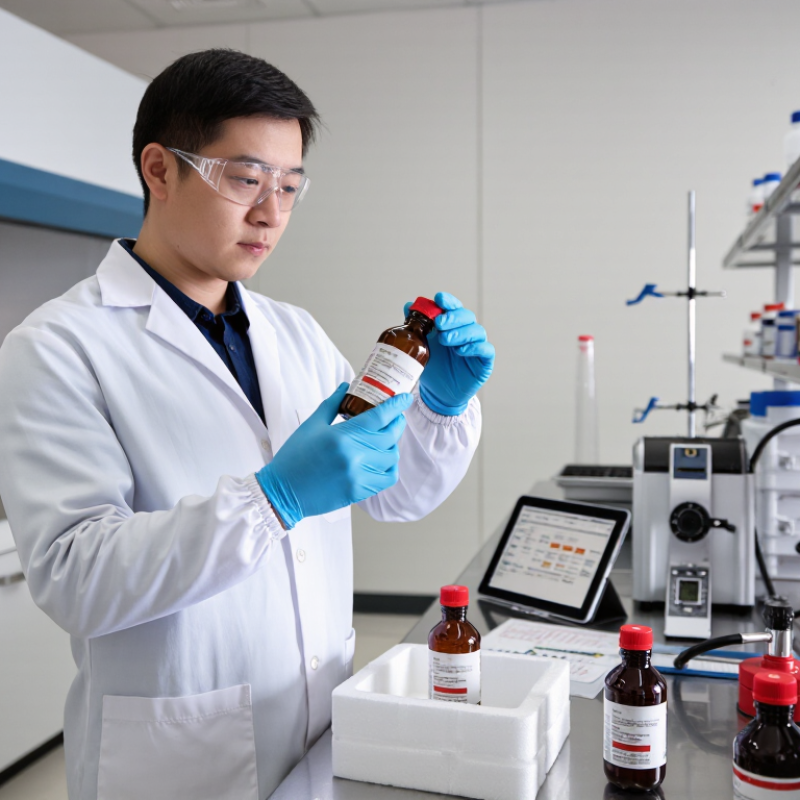
Buying Tert Amyl Peroxypivalate 75% safely starts before the delivery arrives. Select an authorized supplier with documented quality systems and current safety data. Request the Safety Data Sheet, certificate of analysis, transport classification, and recommended storage limits. Confirm that your facility can legally receive this organic peroxide. Receiving staff should verify labels, seals, batch details, and container condition. Do not accept damaged, leaking, warm, or poorly documented packages. Stop the process and contact the supplier.

Cold storage requires more than placing containers in a refrigerator. Use an approved, monitored area designed for organic peroxides, with temperature alarms and restricted access. Follow the supplier’s specified range exactly. Keep the material away from heat, sunlight, flames, contamination, and incompatible chemicals. Store it in the original packaging, upright and secured. A second person should check the temperature log. Small errors can matter.

Tips:

Wear chemical-resistant gloves, protective clothing, eye protection, and suitable face protection during handling. Review the SDS before opening any container. Keep spill materials and emergency contacts nearby. If a package leaks, smells unusual, becomes hot, or shows pressure, evacuate the area and isolate access. Do not touch or move it unless trained and authorized. Call site emergency personnel and the supplier immediately. A checklist helps, but it is not infallible; staff should rehearse the response and record every weakness found.

Tert-Amyl Peroxy-2-Ethylhexanoate 98%: A Buyer’s Guide to Reliable China Suppliers (CAS 686-31-7)

Tert-Amyl Peroxy-2-Ethylhexanoate 98% (CAS 686-31-7) is a versatile organic peroxide initiator for the manufacture of acrylic and vinyl polymers. It supports the (co)polymerization of acrylates and methacrylates across approximately 70–120°C, making it suitable for suspension, solvent, and bulk processes. It can also be used in styrene–acrylonitrile copolymerization and vinyl acetate-based formulations. Market demand is supported by the continued scale of plastics production: PlasticsEurope reported global plastics production of approximately 400.3 million tonnes in 2022, creating sustained demand for reliable polymerization initiators.

When evaluating China suppliers, buyers should request a current certificate of analysis confirming assay, active oxygen content, appearance, and batch consistency. A dependable manufacturer should also provide a safety data sheet, technical data sheet, packaging specifications, production date, recommended storage conditions, and traceable lot numbers. Buyers should verify that the material is manufactured under documented quality procedures and that packaging is appropriate for temperature-sensitive organic peroxides. Independent testing of a pre-shipment sample can further confirm performance and compatibility with the intended formulation.

For industrial procurement, supply continuity is as important as price. Ask about minimum order quantities, lead times, export packaging, temperature-controlled logistics, and technical support during scale-up. Clear communication regarding polymer grade, process temperature, solvent system, and required delivery schedule helps suppliers recommend the correct specification while maintaining consistent results between batches.

FAQS

What should I confirm before requesting a quotation?

Confirm the exact chemical name, concentration, CAS number, and formulation. Similar names can describe different decomposition behavior. Check twice.

What does SADT mean?

SADT means Self-Accelerating Decomposition Temperature. It identifies a possible uncontrolled decomposition temperature under specific packaging conditions.

Why is a SADT value incomplete by itself?

Ask for the package size, test method, and testing basis. A temperature without those details may mislead storage planning.

How should this material be stored?

Follow the current SDS and supplier certificate. Use temperature monitoring. Keep containers away from heat, sunlight, contamination, and incompatible materials.

Can ordinary refrigerator settings determine the storage temperature?

No. Storage requirements depend on the formulation and current safety documents. Do not guess from familiar appliance settings.

How should I evaluate shelf-life?

Compare the manufacture date, recommended shelf-life, and storage range. Verify whether the period applies only to unopened containers.

What records should accompany delivery and storage?

Keep the latest SDS, certificate of analysis, packaging instructions, emergency guidance, and transport classification. Record delivery temperature and container condition.

Does purchase quantity change the safety duties?

Yes. A 25-kilogram drum creates different storage and transport duties than a laboratory sample. Quantity review matters.

What import and compliance details should match?

Documents should match the chemical identity, concentration, UN number, packing instruction, and emergency contact. Check local customs and workplace requirements.

How should the intended use be documented?

State a legitimate industrial or research use, such as polymer research or resin production. Keep it consistent with the site risk assessment.

Is a familiar supplier enough?

No. Review current documents rather than relying on confidence or a low price. I might still overlook something, so independent review helps.

Conclusion

Buying Tert-Amyl Peroxypivalate 75% safely requires confirming exactly what the product is before placing an order. Verify CAS 29240-17-3, the stated 75 wt% active content, and the supplier’s current 16-section Safety Data Sheet (SDS). Request a batch-specific Certificate of Analysis (COA) to confirm identity, concentration, appearance, and quality. Also check the applicable organic-peroxide classification and the correct UN transport entry for the intended shipment.

Before approval, compare the product’s self-accelerating decomposition temperature (SADT), recommended storage temperature, and shelf-life. Ensure it is supplied in UN-approved packaging suitable for ADR, IMDG, or IATA transportation, as applicable. Review local requirements covering purchase quantities, import procedures, end use, and chemical controls. Finally, establish documented receiving, refrigerated storage, personal protective equipment, spill response, fire protection, and emergency procedures, with trained personnel handling the material only under approved site controls.


Maxwell

Maxwell

Maxwell is a dedicated marketing professional at Jiujiang Qianfa Fine Chemical Co., Ltd., where he plays an essential role in promoting the company’s innovative chemical products. With a deep understanding of the industry and a keen eye for detail, Maxwell consistently updates the company’s......
Previous How to Source Tert-Amyl Peroxypivalate 75% Safely in 2026?