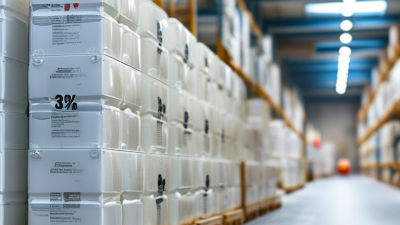
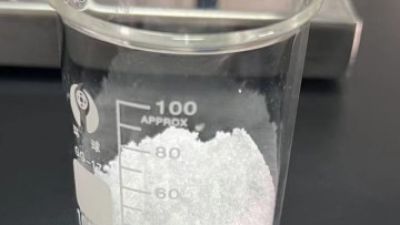
When it comes to sourcing Dibenzoyl Peroxide globally, it’s really more than just about comparing prices. Buyers need to dig a bit deeper — stuff like the grade, active content, packaging, shelf life, and especially the supplier’s documentation. I mean, a drum might look perfectly fine when it arrives, but if the batch records are unclear or it wasn’t stored properly, those little issues can turn into expensive headaches down the line.
As Dr. John C. Warner, a well-known expert in green chemistry, often reminds us — “You can’t manage what you don’t measure.” That’s such a simple but powerful idea, and it applies just as much to checking out suppliers, reviewing specs, planning transport, and verifying quality. Before you even ask for a quote, make sure you know what you actually need — the application, the grade — and don’t hesitate to request the latest technical and safety documents from your potential suppliers. And always ask for traceable batch info. It’s those small details that can make all the difference.
The seven tips I’ve put together here are real-world advice, not some perfect checklist. Sure, a lower quote can look appealing, but it might also mean gaps in service or missing documentation. It’s always worth comparing different offers carefully and reaching out directly to suppliers if something doesn’t add up. Just keep in mind — no checklist, no matter how detailed, can replace a qualified technical review tailored to your specific process.

Identify the Required Dibenzoyl Peroxide Grade and Application
Selecting dibenzoyl peroxide starts with the application, not the lowest quotation. Buyers should define the resin system, curing method, process temperature, and required working time. Polyester molding may require a paste grade, while acrylic polymerization may need a different active content. Powder and liquid formulations are not automatically interchangeable.
Details matter. Check the active peroxide percentage, carrier composition, particle size, and decomposition profile. A wet formulation can reduce handling dust, but its carrier may affect resin compatibility. Ask for a current SDS, certificate of analysis, technical data sheet, and batch traceability records. These documents support reliable comparison across suppliers and regions.
In practice, many purchasing errors come from vague specifications. “Standard grade” is not enough. Request application data, recommended dosage ranges, and compatibility information for your exact resin. Small trials can reveal gel-time changes, surface defects, or incomplete curing before a large order arrives. Do not guess.
Packaging and transport also deserve attention. Dibenzoyl peroxide is treated as an organic peroxide in many jurisdictions, so classification, labeling, and storage conditions must be verified locally. Keep the supply chain documented, and confirm that the selected grade remains stable during the expected journey. One overlooked detail can damage both performance and compliance.
Verify Purity, Concentration, and Technical Specifications
Before ordering Dibenzoyl Peroxide Powder, check purity and concentration as separate specifications. Purity describes the proportion of the stated substance, while concentration may describe its share in a formulated product. Ask for a lot-specific certificate of analysis, not a generic data sheet. Confirm the test method, reported units, manufacturing date, and retest period. Small wording differences can change what a figure means.
Tip: Match every quoted value against the specification sheet and certificate of analysis. Check moisture limits, particle-size range, appearance, and packaging details where relevant to your process. Numbers matter. If documents disagree, pause and request written clarification. A recent, independent laboratory result can help resolve a material discrepancy, though sampling and test methods affect comparisons.
Also verify that the documentation identifies the same grade and lot you will receive. Ask how the supplier controls batch-to-batch variation and whether technical support can explain unusual results. Do not guess. A powder that meets a purity target may still miss a critical particle-size or moisture requirement. Keep the approved specification with purchasing records, and reassess it when your application or incoming test results change. A checklist helps, but it cannot replace reviewing actual lot documents.
Assess Supplier Qualifications and Manufacturing Capability
7 Dibenzoyl Peroxide Buying Tips for Global Buyers
Assessing supplier qualifications requires more than reviewing a polished website. Ask for current business licenses, quality certifications, safety documentation, and export experience. Verify whether the legal entity matches the manufacturing site and invoice details. Request recent certificates of analysis, batch records, and test methods. A reliable supplier should explain purity, active oxygen content, moisture limits, and storage conditions clearly. Vague answers create avoidable risk.
Tips: Check the production facility before discussing large orders. Request a virtual audit or an independent inspection. Observe temperature control, segregation procedures, emergency equipment, and packaging areas. The supplier should show how each batch is identified and traced. Ask about equipment maintenance and operator training. Real capability appears in records, not promises. A common mistake is trusting capacity figures without checking current production schedules. Capacity may exist only on paper.
Manufacturing capability also includes consistent packaging and compliant international documentation. Confirm that containers protect the material from heat, contamination, and physical damage. Review the safety data sheet for accuracy and local language requirements. Ask how nonconforming batches are isolated and investigated. Good suppliers describe corrective actions without becoming defensive. That matters. However, no audit is perfect. Even experienced buyers can overlook subcontracted processing or seasonal quality changes. Keep approval conditional until trial batches meet agreed specifications. Use independent laboratory testing when the application is sensitive. Reliable sourcing is built through evidence, repeated communication, and cautious decisions.
Check Regulatory Compliance and Safety Documentation
Global buyers should treat regulatory paperwork as a purchasing control, not an administrative formality. DiBenzoyl Peroxide Paste can have different classifications because its concentration, carrier, and stabilizers vary. The United Nations Globally Harmonized System, Revision 10, specifies 16 safety data sheet sections. Request the latest SDS, technical data sheet, certificate of analysis, and transport classification. Check the revision date and supplier contact details.
Tip: Compare every document with the shipment label. The product name, concentration range, hazard pictograms, UN number, and storage temperature should match. Ask for batch-specific records, not generic files. A missing emergency procedure is a warning sign. It may indicate weak document control, although not always.
The OECD eChemPortal and national chemical inventories can help confirm hazard information and registration status. Cross-check the importer’s obligations under the destination market’s chemical rules. For example, verify local registration, worker-labeling requirements, and whether the paste is classified as an organic peroxide mixture. ISO 11014 and UN GHS provide useful SDS structure references, but they do not replace national law. Keep written confirmation from the supplier. E-mail promises are easy to lose. A practical review should also inspect packaging photos, closure condition, batch number, and recommended temperature range. Storage guidance deserves extra attention because heat exposure may change product stability. I have seen purchasing teams focus on price first; that habit needs reconsideration. A compliant document set can still be incomplete when the actual mixture changes.
7 Dibenzoyl Peroxide Buying Tips for Global Buyers
Check regulatory compliance and safety documentation before placing an order.
Use this checklist to review each shipment: request a current Safety Data Sheet and lot-specific Certificate of Analysis; confirm applicable local inventory or import requirements; verify the transport classification, packaging, and labels for the specific formulation; and review storage, handling, and emergency-response guidance. Requirements vary by country and product formulation. The chart is a purchasing checklist, not market statistics or a substitute for regulatory advice.
Evaluate Packaging, Storage, and Transportation Conditions
Packaging deserves close inspection before a purchase is confirmed. For Dibenzoyl Peroxide Hardener, ask whether the product arrives in its original, sealed packaging, with a readable label and batch details. Check for crushed corners, leaks, moisture, or signs of heat exposure. Small defects matter. A clean outer carton does not prove the inner container is sound.
Storage requirements should be clear in the product documentation and safety data sheet. Confirm the recommended temperature range, ventilation needs, and separation from incompatible materials. Ask how the supplier monitors conditions while stock is stored. Keep the manufacturer’s packaging and instructions available for the receiving team. A temperature log helps, but it cannot explain every gap or handling event; that deserves a follow-up question.
Transportation is part of product quality, not an afterthought. Request confirmation that the shipment will use suitable packaging, trained handling, and a carrier equipped for the product’s classification. Check that shipping papers and emergency information match the shipment and current requirements. On arrival, compare labels and documents before accepting the goods. If a package looks damaged, isolate the area and follow the safety data sheet and site procedures; do not open or improvise repairs. The paperwork may look perfect, while one box has clearly been mishandled.
Compare Pricing, Minimum Orders, and Delivery Terms
When comparing dibenzoyl peroxide quotations, check the grade, assay, packaging, and price basis. A low price per kilogram may exclude protective packaging, export documents, or freight. Ask whether the offer covers the full order or only a sample quantity. Compare like with like. A spreadsheet can make this easier, but it may still miss charges added after dispatch.
Minimum order quantities affect storage needs and cash flow. Request a written quote for your expected volume, plus any smaller trial quantity. Confirm the product’s shelf life and recommended storage conditions with the supplier’s technical documentation. Delivery terms matter just as much: clarify the named delivery point, who arranges transport, and who handles import paperwork. Ask for a realistic lead time, not only the best-case estimate. Delays happen.
Check that product names are not being treated as interchangeable. Di-Tert-Amyl Peroxide is a different chemical, not an alternative name for dibenzoyl peroxide. Verify the exact substance and specification on the quote, safety documentation, and shipping documents. Before placing an order, get all costs and delivery responsibilities in writing. A brief review now can prevent a costly mismatch later.
Confirm Quality Through Samples, Testing, and Contract Terms
7 Dibenzoyl Peroxide Buying Tips for Global Buyers
Confirm Quality Through Samples, Testing, and Contract Terms
Tip 1
Start with a representative sample, not a polished sales sample. Request material from the intended production batch. Check its appearance, odor, packaging condition, and consistency after controlled storage. A small difference can reveal moisture exposure or poor batch handling. Record observations with photographs and dates.
Tip 2
Use an independent laboratory when the order is important. Test assay, active oxygen, moisture, particle size, and decomposition behavior. Compare the results with the supplier’s certificate of analysis. Ask for batch numbers, test methods, calibration details, and traceability records. Experience shows that paperwork can look complete while testing remains unclear. That is worth challenging.
Tip 3
Put quality expectations into the contract. Define specification limits, approved test methods, sampling procedures, packaging requirements, and shelf-life conditions. Include rules for rejected goods, replacement costs, inspection timing, and dispute resolution. Require advance notice for formulation or production-site changes. Keep transport and storage duties specific. “Proper handling” is too vague.
Do not rely on one test. Review sample results, factory documents, and shipment records together. A second laboratory may be sensible for high-value purchases. No checklist is perfect. Still, clear evidence and precise terms reduce avoidable surprises.
Dibenzoyl Peroxide 75% for Industry: China Supply, Safety & Market Outlook—Insights from Grand View Research and IMARC
Dibenzoyl Peroxide 75% (BPO75%) is an important organic peroxide used across polymer and resin manufacturing. Its free-flowing, water-damped granular form supports efficient handling and consistent dosing in industrial processes. It is widely applied as a Polymerization Initiator for styrene and acrylic resins, while also functioning as a curing agent for unsaturated resins and elastomers. With a melting point of 103–106 °C (decomposes), BPO75% is slightly soluble in water and ethanol and readily soluble in ether, acetone, chloroform, and benzene.
China has become a significant supply base for industrial-grade dibenzoyl peroxide, supported by established chemical manufacturing capacity, export infrastructure, and flexible production capabilities. Our factory supplies premium-grade BPO75% for customers seeking dependable quality, stable specifications, and regular international delivery. Demand is closely linked to construction materials, automotive components, coatings, adhesives, and other polymer-related industries, while market growth is influenced by infrastructure investment and expanding resin applications.
Because BPO75% is a reactive organic peroxide, safe storage and use are essential. It should be kept in its original packaging under controlled conditions, away from heat, sparks, direct sunlight, contamination, and incompatible substances. Professional handling procedures, suitable protective equipment, safety data review, temperature monitoring, and compliance with applicable transport and chemical regulations help support secure operations throughout the supply chain.
FAQS
Start with your resin system, curing method, process temperature, and required working time. A paste and a powder may not suit the same process. Check compatibility, not just price.
No. Their active content and carrier composition can differ. The carrier may affect resin compatibility. Small details matter.
Request a current safety data sheet, technical data sheet, lot-specific certificate of analysis, and batch traceability records. Confirm they describe the exact grade and lot you will receive.
Treat them as separate specifications. Compare each quoted value with the lot certificate, including its test method and units. If documents disagree, pause and ask for written clarification.
Check moisture limits, particle-size range, appearance, and packaging details where relevant. A powder can meet a purity target yet miss another important requirement.
Yes. A limited application trial may reveal changes in gel time, surface quality, or curing. Record the results. One trial may not answer everything.
Verify current classification, labeling, and storage requirements with qualified suppliers and local authorities. Confirm that the grade can remain stable during the expected journey.
Ask for application data, compatibility information, and clear written specifications. “Standard grade” leaves too much unanswered. I would not treat it as enough.
Conclusion
Buying Dibenzoyl Peroxide starts with matching the grade to its intended application and confirming that its purity, concentration, and other technical specifications meet your process requirements. Assess each supplier’s qualifications, production capacity, quality controls, and ability to provide consistent documentation. Request current safety information and relevant compliance documents, and make sure your team understands the product’s handling requirements before placing an order.
Also review packaging, storage, and transportation conditions to ensure the product can be handled appropriately throughout delivery. Compare prices alongside minimum order quantities, lead times, and delivery terms rather than judging offers on cost alone. Before committing to a large purchase, evaluate samples through suitable testing and agree on clear specifications, inspection procedures, and quality expectations in the contract. A careful review of these factors helps global buyers make informed purchasing decisions and reduce supply and quality risks.