Inquiry
Form loading...
Picking an Aibn Initiator for sourcing globally isn’t just about comparing prices — it’s much more of a technical decision. Things like purity, half-life, packaging, shipping stability, and the process temperature all matter. You see, AIBN, or azobisisobutyronitrile, can really support consistent free-radical polymerization — but only if you get the grade right for your formulation. If not, you might end up with uneven conversions, unexpected viscosity issues, or even unstable production runs. No one wants that kind of surprise, right?
Dr. Michael Buback, who’s quite the expert in polymer reaction kinetics, often stresses that: “Kinetics, heat transfer, and process control—they all need to be considered together.” It’s a good reminder, especially when you're comparing suppliers like Mitsubishi Chemical, Nouryon, or regional players who might seem similar on paper. But the real question is: do they behave the same in your reactor? Make sure to check the assay data, how the product decomposes, levels of inhibitors, and how consistent each lot is. Always ask for a current Certificate of Analysis, and don’t forget to get guidance on storage and transport.
And here’s the thing—your sourcing process shouldn’t stop at just the technical datasheet. Take some time to look into the supplier’s experience, their quality systems, production capacity, export paperwork, and how quickly they respond in an emergency. When your package arrives, it should be clearly labeled, sealed tight, and keep the right temperature. Little details like that really do matter. I’ve seen buyers focus heavily on unit cost but overlook the risks involved with lead times — and that can turn out to be a costly mistake.
Of course, no checklist covers everything. Pilot testing is always a must, especially when switching suppliers, grades, or packaging sizes. This guide walks you through how to compare different Aibn Initiator options by using practical judgment, looking at measurable evidence, and leaving room for careful reconsideration when needed.
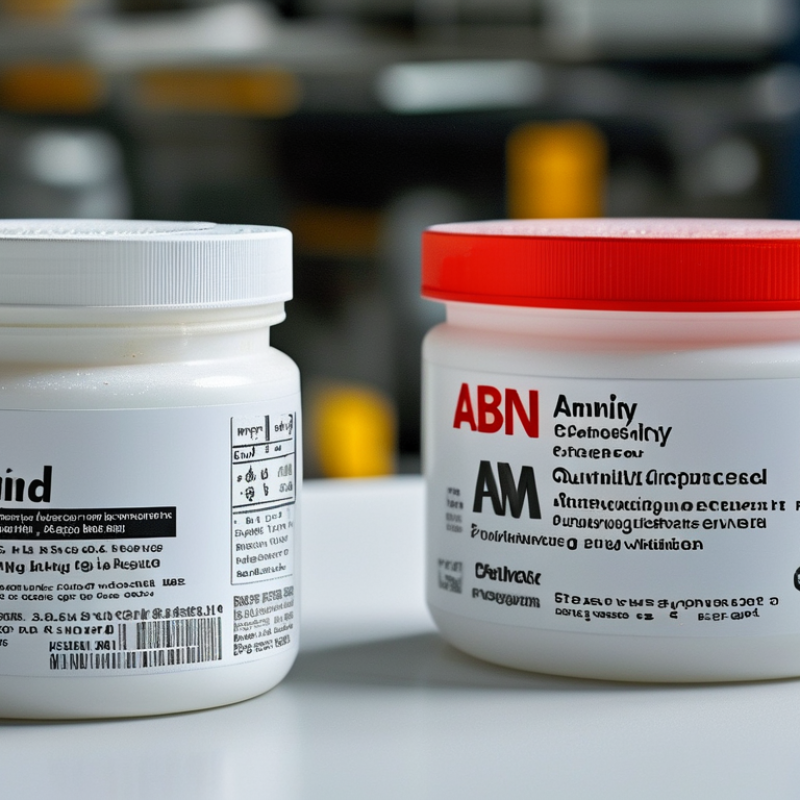
AIBN, or azobisisobutyronitrile, is a heat-sensitive azo compound used to start controlled polymerization reactions. As an Aibn Radical Initiator, it decomposes under heat and forms free radicals. These radicals help monomers join into longer polymer chains. The decomposition rate affects reaction speed, conversion, and molecular weight.
Initiator selection matters because every formulation responds differently. Check the required activation temperature, half-life, purity, and compatibility with the monomer or solvent. A lower-temperature process may need a faster initiating profile. A high-temperature process may require slower radical release. Too much initiator can shorten polymer chains. Too little may leave unreacted material. Small differences matter.
Global sourcing requires more than comparing prices. Request a current certificate of analysis, safety data sheet, batch traceability, and validated storage guidance. Inspect assay results, moisture limits, packaging condition, and remaining shelf life. Temperature exposure during transport can change performance, even when the container looks normal. Confirm documentation before placing a large order. A perfect choice rarely exists. In practice, I would test a small batch first, because laboratory data may not predict scale-up behavior. Packaging and transit planning deserve equal attention.
Technical and sourcing comparison table for selecting azobisisobutyronitrile (AIBN) in polymerization applications
| Selection Dimension | Key Data or Typical Value | Why It Matters | Global Sourcing Checkpoint | Recommended Evaluation |
|---|---|---|---|---|
| Chemical identity | Azobisisobutyronitrile; molecular formula: C8H12N4; molecular weight: approximately 164.21 g/mol; CAS No. 78-67-1 | Confirms that the material is the intended azo Polymerization Initiator and prevents specification mismatches. | Request the product specification, Safety Data Sheet, Certificate of Analysis, and transport classification before purchase. | Identity confirmed |
| Initiator function | Oil-soluble free-radical initiator used mainly for polymerization of suitable vinyl monomers and acrylic systems. | Its decomposition generates radicals that start polymer-chain growth. Initiator choice affects conversion, molecular weight, and process control. | Verify compatibility with the selected monomer, solvent, reactor design, and polymerization temperature. | Use only after process compatibility testing. |
| Decomposition behavior | Thermally decomposes to form free radicals and nitrogen gas. The decomposition rate increases as temperature rises. | Decomposition temperature and rate determine when radical generation begins and how quickly the reaction proceeds. | Compare supplier half-life data using the same test basis and confirm the recommended operating range. | Match half-life to the intended reaction profile. |
| Typical half-life data | Indicative values often used for process planning: approximately 10 hours at 65°C, 1 hour at 82°C, and 0.1 hour at 102°C. Actual values may vary by test method and formulation. | Half-life helps estimate initiator activity, dosing rate, reaction time, and residual initiator levels. | Do not compare values without checking whether they refer to neat AIBN, a solution, or a specific analytical method. | Require a supplier-confirmed technical data sheet. |
| Physical form | Commonly supplied as a white to off-white crystalline powder or in a stabilized formulation, depending on the specification. | Form affects handling, dust control, weighing accuracy, dissolution, and automated feeding. | Confirm particle form, stabilizer content, assay basis, and whether the product is supplied neat or diluted. | Choose the form suited to the plant’s handling system. |
| Solubility profile | Generally soluble in several organic solvents; solubility depends on solvent type, temperature, concentration, and product form. It is not intended for unrestricted water solubility. | Solubility controls feed preparation, concentration uniformity, and the risk of undissolved particles in the reaction mixture. | Request solvent-specific solubility data and conduct a small-scale dissolution test before committing to volume. | Validate in the actual process solvent. |
| Assay and purity | Assay, moisture, insoluble matter, decomposition products, and stabilizer level should be defined by the purchase specification. | Impurities can influence polymer color, molecular weight distribution, reaction reproducibility, and downstream performance. | Set acceptance limits in the purchase contract and review batch-specific COA results. | Use a documented incoming-quality plan. |
| Thermal sensitivity | AIBN is a heat-sensitive organic peroxide-free Azo Initiator that can decompose exothermically when exposed to elevated temperature or contamination. | Thermal exposure may cause loss of activity, pressure generation, or a serious handling hazard. | Check storage temperature limits, maximum transport temperature, emergency procedures, and temperature-monitoring requirements. | Safety review required |
| Storage conditions | Store in a cool, dry, well-ventilated area away from heat, ignition sources, direct sunlight, incompatible materials, and contamination. Follow the current SDS and local regulations. | Correct storage preserves activity and reduces the risk of premature decomposition. | Confirm warehouse capability, temperature records, stock rotation, packaging integrity, and maximum storage period. | Use FEFO inventory control. |
| Packaging and shipment | Packaging should be sealed, chemically compatible, moisture-protective, and suitable for regulated transport where applicable. | Packaging quality affects contamination risk, shelf life, worker safety, and customs clearance. | Review package size, inner and outer materials, UN transport information if applicable, labeling, and temperature-control provisions. | Approve packaging before issuing a purchase order. |
| Regulatory documentation | Required documents may include SDS, COA, technical data sheet, classification and labeling information, declaration of origin, and applicable chemical-registration information. | Incomplete documentation can delay import clearance, customer approval, and production release. | Check destination-country requirements, language rules, customs codes, and chemical inventory obligations. | Document completeness |
| Batch consistency | Compare assay, appearance, moisture, active content, half-life information, and impurity profile across multiple production batches. | Consistent activity reduces batch-to-batch changes in polymerization rate and final polymer properties. | Request representative historical COAs or conduct an approved qualification program using samples from more than one batch. | Qualify at least one alternative supply route where practical. |
| Application fit | Selection depends on monomer type, solvent, target conversion, reaction temperature, desired molecular weight, residence time, and residual-initiator limits. | The lowest purchase price does not necessarily provide the lowest total process cost or best product quality. | Compare technical performance, yield, waste, storage cost, transport requirements, and changeover risk. | Evaluate total cost of ownership. |
| Supplier qualification | Assess manufacturing controls, traceability, quality system, change-notification policy, production capacity, and continuity planning. | Stable supply is essential when AIBN is a critical process input. | Use audits, sample approval, change-control agreements, lead-time records, and a documented corrective-action process. | Approve suppliers through a risk-based qualification process. |
Note: Technical values are typical reference data for preliminary sourcing and process evaluation. Always confirm the current supplier specification, batch-specific COA, SDS, transport classification, storage limits, and destination-market requirements before purchase or use.
Tert-Butyl Peroxypivalate 75% (TBPV, CAS 927-07-1) is a high-efficiency organic peroxide initiator designed for demanding polymerization applications. Its controlled decomposition profile makes it particularly suitable for Low Density Polyethylene (LDPE) production, where consistent initiation can support stable reaction performance and help manufacturers maintain reliable process control. The 75% grade offers a practical balance between active peroxide content and manageable industrial handling.
China-sourced TBPV is available from specialized chemical suppliers and production facilities serving polymer manufacturers worldwide. It can also be used in combination with other peroxide initiators to adjust reactivity and meet different processing requirements. In suspension polymerization of vinyl chloride, TBPV is commonly applied within an operating range of approximately 50°C to 70°C, supporting flexible formulation and production planning. Buyers evaluating suppliers should consider assay consistency, batch traceability, packaging integrity, technical documentation, and transportation arrangements. Proper storage, handling, and use should always follow the applicable safety data sheet and local regulations.
IBN?
The initiator affects reaction speed, conversion, and molecular weight. Too much may produce shorter polymer chains. Too little may leave unreacted material. Small differences matter.
Match the grade with reaction temperature, target conversion, residence time, and molecular-weight requirements. A faster profile may improve productivity. It may also create excess heat or broader molecular-weight distribution. Not always.
Request a current certificate of analysis, safety data sheet, batch number, and test methods. Check assay, moisture, residual solvents, particle form, and shelf life. A generic specification sheet may not reveal batch variation.
High-purity material may suit sensitive polymers. Trace impurities can affect color, viscosity, or final performance. Standard grades may work for less demanding processes. Testing remains necessary.
Compare material, packaging, testing, documentation, freight, storage, and possible waste. A smaller package may cost more per kilogram. It may reduce handling and unused residue. The lowest quotation can mislead.
Check container compatibility, seal integrity, tamper evidence, and inner-pack protection. Confirm the packaging matches current safety documentation and transport requirements. Review routing, delivery reliability, seasonal delays, and tracking. Details matter.
Follow the current safety data sheet and written site controls. Confirm temperature limits, light protection, segregation, shelf life, and stock rotation. Inspect recent batch records and packaging photographs. Run a controlled small-batch trial first. Small trials help.
Not reliably. Scale-up can change heat transfer, mixing, conversion, and molecular-weight behavior. Test the intended solvent, monomer concentration, and temperature profile. The first grade selected may not be perfect. Recheck the data.
Choosing the right Aibn Initiator is essential for achieving stable, predictable, and efficient polymerization results in global sourcing. Buyers should first understand how AIBN decomposes under heat and how its decomposition rate, half-life, purity, and active content influence reaction speed, molecular weight, conversion, and process consistency. The selected grade should match the polymerization temperature, solvent system, monomer type, production scale, and required reaction profile.
A reliable sourcing evaluation should also cover supplier quality systems, batch consistency, technical specifications, safety data, certificates of analysis, traceability, and regulatory documentation for the destination market. Cost comparisons should include not only the material price but also packaging, minimum order quantities, transportation, insurance, import requirements, and storage conditions. Because AIBN is temperature-sensitive, proper packaging, controlled storage, and suitable shipping arrangements are important for maintaining product performance. By assessing technical fit, documentation, supply reliability, total landed cost, and safe handling requirements together, global buyers can make a more informed and sustainable purchasing decision.