Finding reliable suppliers for Tert Butyl Peroxy 98% in 2026? Honestly, it takes more than just glancing at prices or whether a website looks slick. In this article, we’re looking at suppliers of Tert-Butyl Peroxy-3,5,5-Trimethylhexanoate 98% through the kind of practical buying criteria that actually matter. Things like documented assay results, batch traceability, packaging quality, technical support, and responsible logistics. A supplier you can trust should be able to hand over a current Certificate of Analysis, an SDS, product specs, and clear storage guidance. They should also explain how the material is handled under the relevant chemical safety rules.
And yeah, details matter.
A good review shouldn’t just take marketing copy at face value. For instance, buyers can check whether that listed 98% purity lines up with independent testing records and recent production batches. It’s also smart to ask about container seals, temperature controls, shelf life, and how quickly technical staff get back to you. Experienced procurement teams often request samples or verification documents before approving a bigger order. That extra step can feel slow, sure, but it can catch inconsistencies early.
No supplier is perfect. A polished website doesn’t prove manufacturing capability, and a low quote might be hiding weak documentation. Some published info can go stale, too. So this guide is really a nudge to confirm current certifications, export conditions, and regional compliance directly with each company. The best candidates tend to combine transparent communication, consistent product quality, and real-world industry experience. They don’t just promise fast delivery. They show evidence, answer tough questions, and help you keep the purchase safe and lawful from start to finish.
Tert-Butyl Peroxy-2-Ethylhexanoateis an organic peroxide used mainly as a Polymerization Initiator and curing agent. It decomposes when heated, forming reactive radicals that help start chemical reactions. In practical terms, it can support the production of selected plastics, resins, and composite materials. It is not an ordinary solvent or additive.
The phrase “98 percent” usually describes assay or active peroxide content, but the meaning must be verified. Some products contain stabilizers, diluents, or formulation-specific carriers. A reliable supplier should provide a current specification sheet, safety data sheet, batch number, and test method. Check the chemical identity carefully. Similar names can describe different peroxide structures.
Handle this material with professional controls. Storage temperature, packaging, transport classification, and shelf life depend on the exact formulation. Keep it away from heat, contamination, sparks, and incompatible substances. Small details matter.
In supplier evaluations for 2026, I would compare technical consistency rather than price alone. Ask for recent quality records and clear emergency guidance. A certificate without traceable testing is not enough. I have also learned that “98 percent” can create false confidence when the unit, assay basis, or storage history is unclear. Verify those points before placing an order.
For the 98% grade commonly identified as Di-Tert-Butyl Peroxide, chemical purity matters, but handling data matters more. Its molecular formula is C8H18O2, with a molecular weight near 146.23 g/mol. It is usually a clear, colorless to pale-yellow liquid with low water solubility. Organic solvents dissolve it more readily. The peroxide bond can decompose exothermically, especially when exposed to heat, contamination, or incompatible materials. Temperature control is essential.
Its decomposition generates free radicals, making it useful as an initiator in selected polymerization processes. Manufacturers also use it for elastomer crosslinking, polymer modification, and controlled curing applications. Process engineers may value its predictable decomposition profile. However, reaction temperature, residence time, concentration, and material compatibility must be validated for each formulation. Small changes can affect molecular weight and product consistency. Experience matters here.
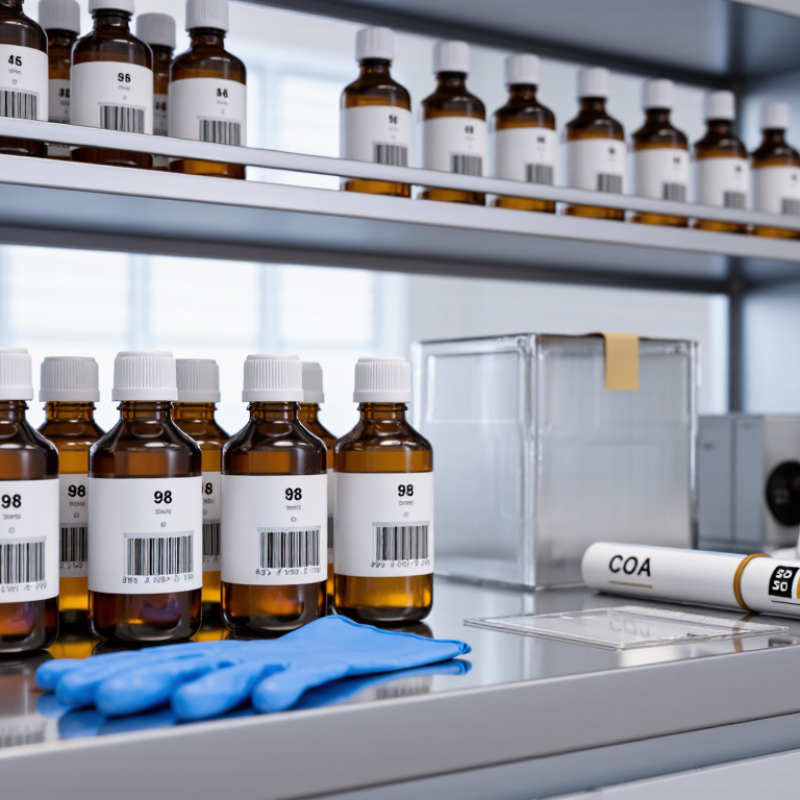
A dependable supplier should provide a current certificate of analysis, safety data sheet, assay results, decomposition information, and transport documentation. Packaging should be suitable for organic peroxides, with clear batch identification and storage instructions. I would not choose a supplier based on 98% purity alone. Trace impurities may influence polymer color, gel formation, or reaction control. Testing a representative sample is wise. Storage conditions also require careful review because commercial formulations may differ. The label can look simple. The risk is not.
Choosing a Tert Butyl Peroxy 2 Ethylhexanoate supplier requires more than comparing prices. Start with documented product identity, concentration, purity, and batch consistency. Request a current certificate of analysis for every production lot. Check whether the certificate lists test methods, manufacturing dates, and traceable batch numbers.
A reliable supplier should provide a clear safety data sheet, handling guidance, and legally compliant transport documentation. Review its storage controls, temperature monitoring, and emergency procedures. Organic peroxides require careful management. Small details matter, such as insulated packaging, accurate labels, and delivery records showing temperature conditions.
Ask how the supplier manages deviations and customer complaints. A professional team should explain its quality system without vague promises. Audited facilities, qualified technical staff, and consistent documentation provide stronger evidence than a polished website. References from industrial users can also reveal delivery reliability and communication quality.
Do not accept unexplained differences between the specification and the delivered material. Compare assay results, appearance, odor, and stability information with your internal requirements. If a supplier refuses to share essential documents, pause the evaluation. That hesitation may be inconvenient, but ignoring it can create larger problems.
The best assessment is not always perfect. I would recheck assumptions after the first shipment. Product quality, packaging, and support should remain consistent across several batches. Linked emergency contacts and responsive technical service are valuable when conditions change.
When evaluating 2026 suppliers of tert-butyl peroxy compounds, documentation should guide every purchasing decision. A reliable supplier provides a current specification sheet, safety data sheet, certificate of analysis, and transport classification. The certificate should identify assay, active oxygen, appearance, stabilizer content, batch number, and test methods. Ask whether results come from validated laboratory procedures. Small details matter.
Quality testing should match the product’s intended industrial use and declared concentration. For T Butyl Peroxy 2 Ethylhexanoate, request evidence of identity, purity, thermal stability, and storage-life testing. Independent or accredited laboratories add credibility, especially when results include sample dates and acceptance limits. Packaging records should show container material, seal inspection, net weight, and temperature controls. A cold-chain log is useful when its readings are traceable. Some suppliers provide impressive tables yet omit raw test conditions. That gap deserves a written explanation.
Experienced buyers can review retention samples, change-control notices, and complaint-response times before approval. Clear labels should include batch traceability, hazard communication, storage limits, and emergency contact details. Supplier audits are valuable, though a video call cannot replace a site assessment. I have seen paperwork look complete while a revision date was missing. That is easy to overlook. Recheck it. Select suppliers that answer technical questions consistently and correct errors openly. Good documentation supports safer handling, quality decisions, and accountable purchasing.
When evaluating 2026 suppliers of 98 percent tert-butyl peroxide, packaging quality deserves close attention. The exact chemical identity must be confirmed first, because similar names can have different handling requirements. Request the current Safety Data Sheet, product specification, batch information, and transport classification. Reliable suppliers should use approved packaging designed for organic peroxides, with secure closures and clear hazard labels. Containers should remain upright and protected from impact.
Storage areas need good ventilation, restricted access, and dependable temperature control. Keep containers away from direct sunlight, heaters, flames, and incompatible chemicals. Follow the supplier’s specified storage temperature exactly. Do not combine new stock with older material without checking dates and condition. A cool, clean, dedicated area is safer than an improvised cabinet. Small details matter.
Transportation requires trained personnel, suitable vehicles, correct documentation, and legally compliant labels. The load should be secured to prevent movement, crushing, or falling. Temperature monitoring may be necessary during long journeys or warm weather. Never transfer this material into unapproved containers, and never leave it unattended in a parked vehicle. Before dispatch, inspect the closure, outer package, markings, and emergency information. A common mistake is trusting familiar packaging too quickly. It can look intact while suffering hidden damage. I would also review the carrier’s emergency plan, not just the shipping price.
| Data Dimension | Requirement / Reference Value | Packaging and Handling Implication | Supplier Documentation to Verify |
|---|---|---|---|
| Chemical identity | Di-tert-butyl peroxide (Dtbp), commonly described as tert-butyl peroxide; CAS No. 110-05-4 | The exact chemical name and CAS number must appear consistently on the label, SDS, certificate of analysis, and transport documents. | Current Safety Data Sheet, Certificate of Analysis, product specification, and batch traceability record |
| Assay / concentration | Nominal assay: 98% by mass, subject to the agreed product specification | High assay may increase peroxide reactivity; do not dilute, reformulate, or blend without validated process and safety approval. | Lot-specific assay result, analytical method, impurity profile, and uncertainty or acceptance range |
| Chemical family | Organic peroxide; thermally unstable and capable of exothermic decomposition | Keep away from heat, sparks, flames, direct sunlight, contamination, reducing agents, acids, bases, metals, and combustible materials. | Hazard classification, incompatibility statement, decomposition information, and emergency response guidance |
| Indicative transport classification | Typically regulated as an organic peroxide, liquid, Division 5.2; the exact type and UN entry depend on the approved formulation and transport mode. | The shipper must use the classification stated in the current SDS and competent-authority-approved transport documentation. | SDS Section 14, transport classification certificate, emergency contact, and mode-specific shipping declaration |
| UN packaging performance | Use packaging authorized for the applicable organic-peroxide entry and packing instruction; ordinary commercial containers are not sufficient. | Use compatible, closed, leak-resistant inner packaging placed in approved outer packaging with cushioning and securement where required. | UN packaging mark, packing instruction, packaging certificate, closure specification, and compatibility statement |
| Recommended container materials | Material compatibility must be confirmed for the specific formulation; compatible high-density polyethylene or approved metal packaging may be used where permitted. | Avoid unknown plastics, reactive metals, damaged containers, and closures that can become blocked or create pressure buildup. | Container compatibility test, closure design, maximum fill level, and packaging qualification record |
| Container size and fill control | Follow the applicable dangerous-goods packing instruction and leave the specified expansion space; do not overfill. | Containers should remain upright, secured against movement, and protected from impact during loading and unloading. | Approved container capacity, maximum fill ratio, palletization method, and loading checklist |
| Storage temperature | Store at the temperature range stated in the product SDS; a controlled cool area, commonly around 2–10°C for temperature-sensitive peroxide products, may be specified. | The product-specific SDS takes priority. Use continuous temperature monitoring and alarms where refrigerated storage is required. | Recommended storage range, maximum allowable temperature, temperature excursion procedure, and stability data |
| Heat and decomposition control | Keep below the product’s specified control temperature and away from heat sources; decomposition temperature is formulation-dependent. | Do not rely on a generic temperature value. Install suitable ventilation, heat detection, and emergency isolation procedures. | SADT or equivalent stability data, decomposition onset information, and thermal hazard assessment |
| Storage area design | Dedicated, cool, dry, well-ventilated area with restricted access and appropriate fire protection. | Segregate from flammable materials, oxidizable substances, acids, bases, amines, reducing agents, and sources of ignition. | Storage compatibility matrix, fire protection plan, ventilation design, and inspection schedule |
| Shelf life and stock rotation | Use the manufacturer’s validated shelf life and expiry date; apply first-expired, first-out inventory control. | Do not use material with expired shelf life, damaged packaging, unknown storage history, or unexplained appearance changes without technical approval. | Manufacture date, expiry date, retest policy, storage history, and batch release status |
| Transportation conditions | Use an authorized dangerous-goods carrier and the transport mode permitted for the applicable organic-peroxide classification. | Protect from sunlight, heat, freezing if prohibited by the SDS, vibration, impact, and prolonged transit delays. | Carrier authorization, route risk assessment, temperature-control plan, and incident communication procedure |
| Marking and labeling | Display the correct organic-peroxide hazard label, handling marks, product identification, batch number, net quantity, and expiry information as required. | Labels must remain legible, securely attached, and visible after overpacking or palletization. | Label artwork, dangerous-goods declaration, package marking photographs, and regulatory review record |
| Personal protective equipment | Chemical-resistant gloves, protective clothing, safety goggles or face protection, and suitable footwear based on the SDS risk assessment. | Use non-sparking tools where appropriate, prevent skin and eye contact, and provide eyewash and emergency shower facilities. | SDS Sections 7 and 8, PPE compatibility data, worker training records, and spill-response procedure |
| Spill and emergency response | Isolate the area, remove ignition sources, prevent entry into drains, and use the response method specified in the SDS. | Do not return spilled material to the original container or allow contaminated absorbents to accumulate in closed containers. | Emergency response guide, spill-kit specification, disposal instructions, and 24-hour emergency contact |
| Supplier qualification criteria | Demonstrated control of assay, impurities, thermal stability, packaging, batch consistency, and dangerous-goods compliance. | Prioritize suppliers able to provide complete technical files, stable lead times, compliant packaging, and documented temperature-controlled logistics. | Quality certifications, audit questionnaire, change-control policy, complaint history, and certificate-of-analysis samples |
Regulatory note: Transport classification, UN number, packing instruction, storage temperature, and packaging limits are formulation- and jurisdiction-dependent. Always confirm the current supplier SDS, applicable ADR/RID, IMDG, IATA, and national dangerous-goods requirements before shipment or storage.
Buying 98 percent tert-butyl peroxide requires more than comparing a single quoted price. Global suppliers often differ in purity testing, packaging, production capacity, and technical support. A low offer may exclude refrigerated transport, dangerous-goods handling, or import documentation.
Request a recent certificate of analysis, safety data sheet, batch history, and shelf-life statement. Compare active oxygen results, inhibitor information, container size, and temperature requirements. Suppliers with regional warehouses may deliver faster, while larger plants can offer steadier volumes. However, capacity claims should be checked against lead times and allocation policies. Ask for a written production schedule.
Service quality becomes visible during disruptions. Can the supplier answer process questions within one business day? Does it provide packaging photographs, emergency contacts, and clear replacement procedures? These details matter when material arrives with damaged insulation or an unclear label. Price still matters. Build a landed-cost table including insurance, customs, storage, testing, and disposal of rejected material.
Do not confuse tert-butyl peroxide with Tert-Amyl Peroxy-2-Ethylhexanoate. Their handling profiles and commercial specifications may differ. That mistake is easy to make when product names appear similar. I would also request a small qualification order before signing a yearly contract. It may slow purchasing, but it exposes weak documentation early. Regional regulatory knowledge is valuable, yet it should never replace independent verification of certificates and transport compliance.
The chart compares anonymized global supplier groups using a 100-point benchmark covering indicative price competitiveness, production capacity, lead-time reliability, documentation quality, and technical service. Higher scores indicate stronger overall performance.
Values are normalized procurement benchmarks for market screening and should be verified against current quotations, SDS documentation, regional regulations, packaging requirements, and confirmed production capacity.
It is usually a clear, colorless to pale-yellow liquid. Its formula is C8H18O2, with a molecular weight near 146.23 g/mol. Water dissolves little of it. Organic solvents usually dissolve it more easily.
The peroxide bond can decompose exothermically. Heat, contamination, or incompatible materials may accelerate decomposition. Keep temperature limits visible. Small oversights can matter.
It can initiate selected polymerization reactions. It also supports elastomer crosslinking, polymer modification, and controlled curing. Reaction temperature and residence time need validation for each formulation.
Request a current certificate of analysis, safety data sheet, specification sheet, and transport documentation. The certificate should show assay, active oxygen, appearance, stabilizer content, batch number, and test methods.
Testing should match the intended application and concentration. Review identity, purity, thermal stability, storage life, and acceptance limits. Sample dates should be clear. Raw test conditions should not be missing.
Check container material, seal condition, net weight, batch identification, and temperature records. A traceable cold-chain log can support delivery review. Inspect insulation and labels when the package arrives.
Compare total landed cost, not only the quoted price. Include insurance, customs, refrigerated transport, storage, testing, and rejected-material disposal. Also compare capacity, lead times, technical support, and allocation policies.
Missing revision dates, unclear storage limits, weak batch traceability, and slow technical replies deserve questions. Impressive tables are not enough. A complete-looking file can still contain gaps.
A small order can expose weak documentation, damaged packaging, or inconsistent material early. It may slow purchasing slightly. That delay may prevent larger problems later.
This guide explains what Tert-Butyl Peroxy-3,5,5-Trimethylhexanoate 98% is and why it is used in selected industrial processes, including polymer production, specialty chemical manufacturing, and controlled curing applications. It outlines key chemical properties, performance considerations, handling characteristics, and the importance of matching product specifications with process requirements. Readers will also learn how to evaluate suppliers based on manufacturing consistency, technical expertise, production capacity, communication, and supply reliability.
The article further discusses quality standards, analytical testing, certificates of analysis, safety data sheets, traceability, and other essential product documentation. It reviews suitable packaging, temperature-controlled storage, labeling, and safe transportation practices for organic peroxide materials. Finally, it presents a practical framework for comparing international suppliers by price, available capacity, quality assurance, lead time, technical support, and after-sales service, helping buyers make informed and safety-conscious sourcing decisions.